Participants experienced an average 52% reduction in PTSD symptom severity in the FDA-cleared clinical trial.
68%
No Longer Met the Clinical Threshold for PTSD
More than two-thirds of the participants no longer met the clinical criteria for PTSD following MeRT treatment.
Clinically Significant Results
Meaningful Improvement
Participants experienced improvements that exceeded the benchmark for clinically meaningful change. This means that the participants experienced noticeable changes following MeRT treatment.
Objective Improvement
Measurable Brain Changes
Symptom improvement was accompanied by more normal patterns of brain function.
Benefits Continued Over Time
Lasting Results
Participants maintained and continued to improve their results during the six-month follow-up period following the start of treatment
Results are from the FDA-cleared clinical trial evaluating the MeRT® System for the treatment of PTSD. Individual results may vary. MeRT® is FDA-cleared for the treatment of adults with PTSD.
William served proudly and was left with PTSD, like so many of his military brothers and sisters. Brain Treatment Michigan has been helping him “clear the fog” and find his way back to being himself and to serving other veterans.
PTSD Affects the Brain, Not Just Emotions
Post-Traumatic Stress Disorder (PTSD) can develop after a single traumatic event or prolonged exposure to extreme stress. While some people recover over time, others experience persistent symptoms that interfere with sleep, mood, relationships, and daily life.
Research shows that PTSD is often associated with measurable disruptions in brainwave activity — particularly in areas responsible for emotional regulation, threat response, and sleep. That’s why treatments that directly address brain function may help when talk therapy or medication alone have not.
Symptoms vary from person to person, but may include:
Flashbacks or intrusive memories
Nightmares or disrupted sleep
Anxiety, panic attacks, or hypervigilance
Depression or emotional numbness
Irritability, anger, or mood swings
Avoidance of people, places, or situations
Difficulty concentrating or remembering
Heightened startle response
Feelings of hopelessness
If symptoms persist for months or worsen over time, additional treatment options may be worth exploring.
TMS for PTSD When Depression Is Also Present
Transcranial Magnetic Stimulation (TMS) is FDA-cleared for Major Depressive Disorder. For individuals experiencing PTSD alongside depression, TMS may be used to target depression-related brain circuits, which can also reduce overlapping symptoms such as anxiety, sleep disruption, and emotional reactivity.
At this time:
TMS is FDA-cleared for Depression and OCD
TRICARE may cover TMS when depression criteria are met
Our team can help determine whether this applies to your situation.
MeRT for PTSD
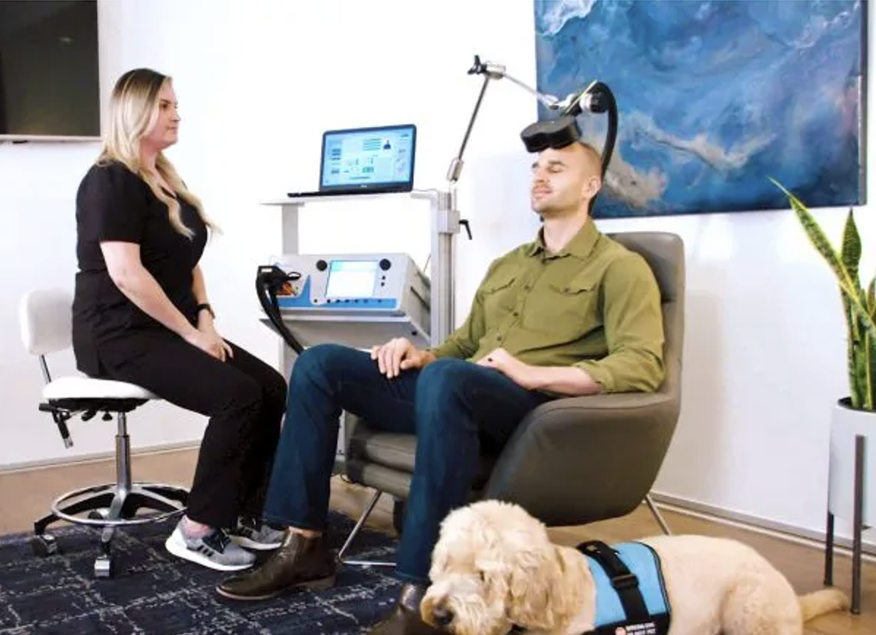
MeRT® (Magnetic e-Resonance Therapy) is an advanced, personalized form of neuromodulation that builds on TMS technology.
What makes MeRT different is how the treatment is planned:
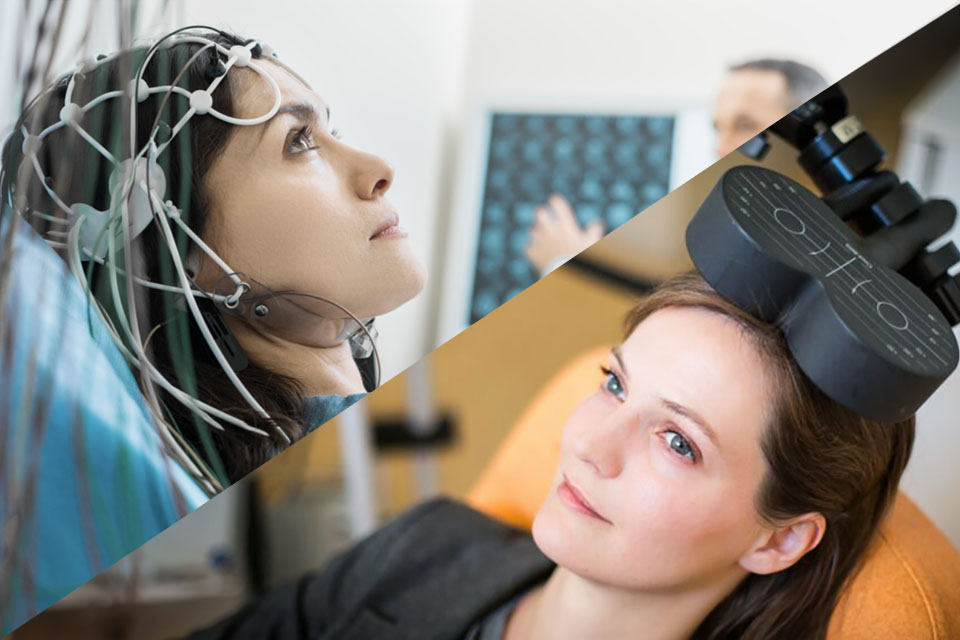
A quantitative EEG (qEEG) maps your brain’s activity
Areas of dysregulation are identified
Stimulation parameters are customized to your brain patterns
Rather than using a one-size-fits-all protocol, MeRT tailors stimulation location, frequency, and timing based on objective data.
Personalized Protocol: Treatment parameters are customized
Gentle Magnetic Stimulation: Helps regulate brain communication
Ongoing Monitoring: Brain scans are repeated to adjust treatment
Many patients report improvements in sleep, emotional regulation, anxiety, and overall quality of life.
What the Treatment Process Looks Like
Initial Call Speak with our New Patient Coordinator to review symptoms, treatment history, and insurance eligibility.
Evaluation If appropriate, we schedule testing and a physician consultation.
Treatment Phase
Sessions occur Monday–Friday
Each session lasts ~30–45 minutes
Most patients complete treatment in 4–8 weeks
Progress Monitoring Your care team monitors response and adjusts as needed.
Many patients notice improvements in sleep, mood, or energy within the first few weeks.
Patient Stories
“It was absolutely terrifying not to know what was wrong with me or how to fix the problem. MeRT not only identified the deteriorated state of my brainwave activity, it restored its function.”
US Army Veteran
“I underwent neural restorative therapy [MeRT] for two months with total symptom resolution. Now I can function again at work and can spend much-needed time with my family. I have my sense of well-being back and a clarity of thought I haven’t had in many years.”
US Army Veteran
“Within four days of being treated, I was sleeping through the night. My anger had subsided significantly, and I was smiling and enjoying things again. I was able to focus and concentrate on information much more efficiently and easily and did not get lost in conversation as I had prior to coming to BTC. My chronic headaches had ceased, my balance was returning, and my ringing in my ears (tinnitus) had also ceased.”
TMS therapy is FDA-cleared for the treatment of Major Depressive Disorder. At this time, TRICARE is the primary insurance plan we work with for TMS when medical criteria are met.
For individuals with PTSD, coverage may be possible when PTSD occurs alongside depression, which is common. In these cases, TMS is authorized under the depression diagnosis—not PTSD alone.
TRICARE coverage for TMS typically requires:
A documented diagnosis of Major Depressive Disorder
Inadequate response to at least two antidepressant medications
No medical contraindications to TMS therapy
Our New Patient Coordinator can help you:
Review whether your symptoms and history may meet TRICARE criteria
Explain how authorization works and what documentation is required
Guide you through the next steps if coverage may be possible
While coverage is not guaranteed, we have extensive experience working with TRICARE beneficiaries, including active-duty service members, veterans, and their families, and can help you understand whether TMS may be an option in your situation.
MeRT and PTSD: Insights from The Broken Brain Podcast
The Broken Brain Podcast explores the complex relationship between brain function, trauma, and recovery. In a featured episode, the discussion centers on how advanced neuromodulation approaches—like EEG-guided magnetic stimulation—are being studied and used to support individuals with Post-Traumatic Stress Disorder (PTSD).
In this episode, Dr. Erik Won, President and Chief Medical Officer of Wave Neuroscience, explains how PTSD is often associated with disrupted brainwave patterns that affect sleep, emotional regulation, threat response, and focus. Rather than relying solely on medications, neuromodulation approaches aim to help the brain regain more stable and balanced activity.
The conversation highlights the use of EEG-guided magnetic stimulation in veterans and others with trauma-related conditions, including PTSD and PTSD with co-occurring depression. Dr. Won also discusses why some individuals continue to struggle despite therapy and medication—and how targeting brain function directly may help when other treatments have fallen short.
This episode is especially relevant for those coping with long-standing PTSD symptoms, as well as veterans and first responders seeking non-drug treatment options that address the neurological effects of trauma.
Speak with Our New Patient Coordinator
If you’re exploring options for PTSD or PTSD with depression, we’re here to help you understand whether TMS or MeRT may be appropriate.