Call Us:  269-430-7966

Depression Treatment in Michigan

TMS Therapy for Treatment-resistant Depression

Our clinic offers FDA-cleared transcranial magnetic stimulation (TMS) for adults with major depressive disorder who haven’t found relief with medication.

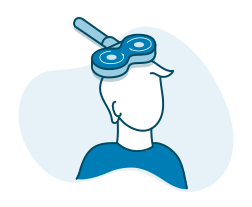
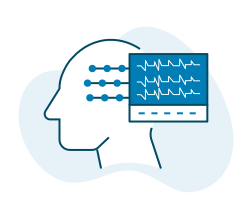
Non-invasive • Drug-free • No anesthesia
Insurance may cover treatment


Depressed woman with glass of water and antidepressant pills at table in kitchen

When Medication Isn’t Enough, There Are Other Options

Depression can make even simple daily tasks feel overwhelming—especially when you’ve tried medications that didn’t work or caused unwanted side effects.

At Brain Treatment Center Michigan, we offer FDA-cleared TMS therapy for treatment-resistant depression. TMS uses gentle magnetic stimulation to target brain regions involved in mood regulation, helping restore healthier brain activity without medication or invasive procedures.

If you’ve tried two or more antidepressants without meaningful improvement, you may qualify for TMS, and insurance may help cover treatment.

TMS Therapy for Depression

Transcranial Magnetic Stimulation (TMS) has been used safely and effectively for depression since 2008. It is FDA-cleared for:

  • Major Depressive Disorder (MDD)

  • Treatment-Resistant Depression (TRD)

TMS works by delivering focused magnetic pulses to specific regions of the brain associated with depression. These pulses help “re-activate” underperforming neural pathways linked to mood, motivation, and emotional regulation.

TMS is:

  • Non-invasive

  • Drug-free

  • Performed while you are awake

  • Not associated with systemic side effects common with medications

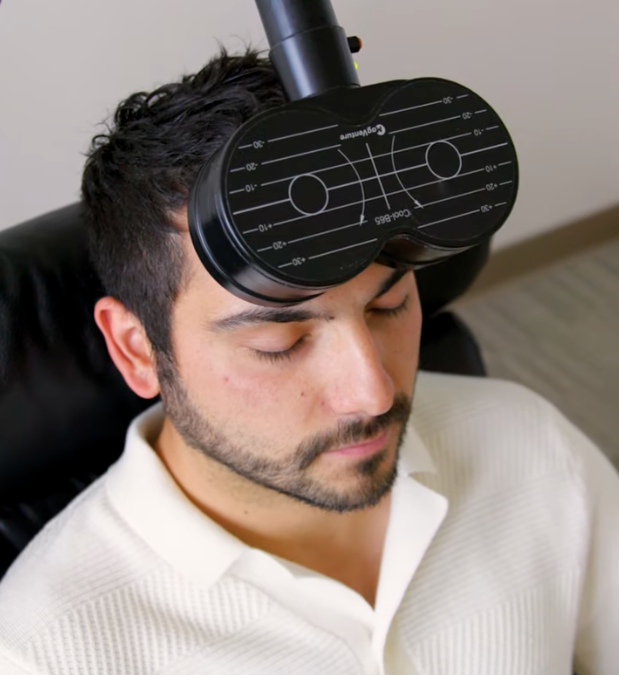
Man receiving anxiety treatment with MeRT
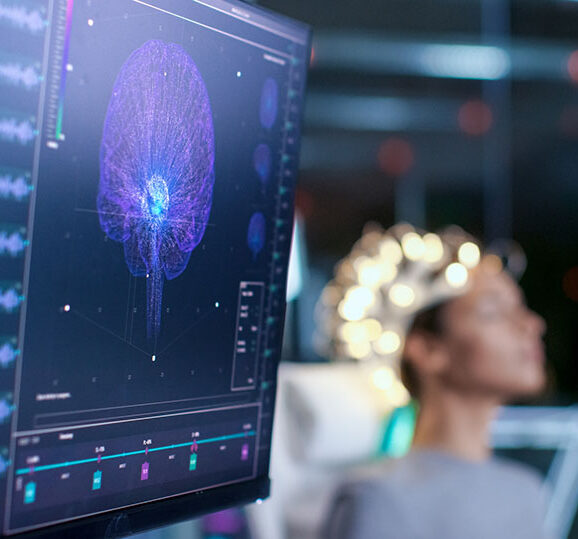
EEG treatment

How MeRT Builds on Standard TMS

Some patients at our clinic may be candidates for MeRT® (Magnetic e-Resonance Therapy), a more individualized form of TMS.

While standard TMS follows a standardized protocol, MeRT uses advanced diagnostics, including quantitative EEG (qEEG), to better understand how each person’s brain is functioning before treatment begins.

This information allows physicians to customize stimulation parameters, such as location and frequency, based on individual brain patterns.

Important distinction: Insurance coverage applies to FDA-cleared TMS for depression.

MeRT involves additional diagnostics and personalization and may include services not covered by insurance.

Our team will clearly explain which parts of care may be covered and which are not before you begin.

brain graphic

What the Treatment Process Looks Like

  1. Initial Call
    Speak with our New Patient Coordinator to review symptoms, treatment history, and insurance eligibility.

  2. Evaluation
    If appropriate, we schedule testing and a physician consultation.

  3. Treatment Phase

    • Sessions occur Monday–Friday

    • Each session lasts ~30–45 minutes

    • Most patients complete treatment in 4–8 weeks

  4. Progress Monitoring
    Your care team monitors response and adjusts as needed.

Many patients notice improvements in sleep, mood, or energy within the first few weeks.

Patient Stories

“I just finished six weeks of their specialized form of TMS treatment, and it is life-changing. If your depression or anxiety has been resistant to medications, therapy, or other forms of treatment, I highly recommend the Brain Treatment Center.”
Mary Ann E.
“I recently conducted 6 weeks of TMS treatments with incredible results. My mind is clear, and I am able to focus much better than before. My memory recall is also much improved.”
Skip S.
“I felt like I was alone even though I was surrounded by love and care. It was just a cloud that would linger over my life every now and again. BTC helped me understand what was going on in my head, and after a month of treatment, I was grateful to be DEPRESSION FREE and MEDICATION FREE for the first time in my life.”
Depression Patient

Depression Treatment Backed by Extensive TMS Research

Transcranial Magnetic Stimulation (TMS) is one of the most well-studied non-invasive treatments for depression—particularly for people who have not responded to antidepressant medications.

Multiple large reviews and clinical studies have shown that rTMS is effective, well-tolerated, and capable of producing meaningful improvements in mood, function, and quality of life for patients with Major Depressive Disorder and treatment-resistant depression.

Key findings from peer-reviewed research include:

  • TMS is recommended as a first-line option for moderate to severe depression, alongside medication and psychotherapy (Psychiatric News, 2022).

  • Patients who did not respond to antidepressants often experienced significant symptom reduction with rTMS, with comparable or better tolerability than medication.

  • Large meta-analyses involving thousands of patients confirm rTMS effectiveness for symptom reduction, response, and remission.

  • Clinical studies show improvements not only in depression scores, but also in daily functioning and quality of life.

  • Accelerated and targeted magnetic stimulation protocols have demonstrated rapid remission in a significant percentage of patients with severe depression.

Today, FDA-cleared TMS therapy is widely recognized as a safe, evidence-based option for depression, especially when traditional treatments have not provided relief.

Insurance Coverage for Depression Treatment

TMS therapy is FDA-cleared for the treatment of depression. At this time, TRICARE is the primary insurance plan we work with for TMS treatment when medical criteria are met.

TRICARE coverage for TMS typically requires:

  • A diagnosis of Major Depressive Disorder

  • Inadequate response to at least two antidepressant medications

  • No medical contraindications to TMS therapy

Our New Patient Coordinator can help you understand whether you may qualify under TRICARE by:

  • Reviewing eligibility requirements

  • Explaining the authorization process

  • Guiding you through the next steps

Coverage is not guaranteed, but we are experienced in working with TRICARE beneficiaries and can help you determine whether TMS may be an option for you.

Talk With a New Patient Coordinator

If depression has continued despite treatment, you don’t have to navigate the next steps alone.

Start with a free, no-obligation call to learn whether TMS may be a fit for you and what coverage options are available.

Or fill out the form below, and we will contact you.

Contact Us

"*" indicates required fields

This field is for validation purposes and should be left unchanged.
Depressed woman with glass of water and antidepressant pills at table in kitchen

When Medication Isn’t Enough, There Are Other Options

Depression can make even simple daily tasks feel overwhelming—especially when you’ve tried medications that didn’t work or caused unwanted side effects.

At Brain Treatment Center Michigan, we offer FDA-cleared TMS therapy for treatment-resistant depression. TMS uses gentle magnetic stimulation to target brain regions involved in mood regulation, helping restore healthier brain activity without medication or invasive procedures.

If you’ve tried two or more antidepressants without meaningful improvement, you may qualify for TMS, and insurance may help cover treatment.